
Irani, Persian, Parsi or Muslim: The Untold Indian-Iranian identity and Story Brewing in “Ek Irani Chai aur Bun-Maska”
International Desk: Bureau ; Published on 10/03/2026
“The story of Irani, Persian, Parsi and Muslim communities in India is more than a tale of migration—it is a lesson in civilizational coexistence as the Indian-Iranians. When Zoroastrians fled persecution centuries ago, India welcomed them with dignity and respect. From building industries to shaping Mumbai’s iconic Irani café culture, their contribution reflects how societies grow stronger through tolerance and shared prosperity. The simple phrase “Ek Irani chai aur bun-maska” today represents not just food, but a cultural bridge between Persia and India. In an era of global divisions, this legacy reminds us that hospitality, empathy and cultural harmony remain the strongest foundations of any civilization.” — Criminologist Snehil Dhall
Mumbai: Long before global café chains like Starbucks arrived in India, Mumbai’s social life revolved around the iconic Irani cafés scattered across the city. These modest yet culturally rich establishments introduced generations of Mumbaikars to the comforting ritual of Irani chai and bun maska, becoming gathering places for writers, workers, businessmen, and students alike. More than just eateries, these cafés represent a larger historical journey—one that traces the migration and integration of Irani, Persian, and Parsi communities into India, particularly Mumbai and parts of Gujarat.
Understanding the Difference: Persian, Parsi and Irani
The terms Persian, Parsi, and Irani are often used interchangeably, but they represent distinct historical identities. Persian broadly refers to the people and culture originating from ancient Persia, present-day Iran. Persian civilization is among the oldest in the world and has profoundly influenced philosophy, poetry, architecture, governance, and religion across Asia and beyond. Parsis are descendants of Zoroastrians who migrated from Persia to India more than a thousand years ago. They follow the teachings of Zarathushtra Spitama—widely known as Zoroaster or Zarathustra—an ancient Iranian spiritual reformer who founded Zoroastrianism. His philosophy emphasized ethical living through the timeless principle: Good Thoughts, Good Words, Good Deeds. Iranis, by contrast, generally refer to later migrants who arrived in India during the 19th and early 20th centuries from Iran. Many of them established cafés, bakeries, and restaurants that eventually became an inseparable part of Mumbai’s cultural and culinary life.
Why Zoroastrians Migrated to India
Historical accounts suggest that after the Muslim conquest of Persia in the 7th century, followers of Zoroastrianism gradually migrated to preserve their religious traditions and way of life. Groups of Zoroastrians sailed across the Arabian Sea and arrived on the western coast of India. According to the traditional chronicle Qissa-i Sanjan, they landed in Gujarat where a local Hindu ruler granted them asylum. A famous legend known as the “milk and sugar” story describes how the ruler presented a bowl filled with milk to indicate that the land was already full. In response, the Zoroastrian leader gently added sugar into the milk without causing it to overflow—symbolizing that the newcomers would blend peacefully into society and sweeten the culture without disturbing it. India—especially Gujarat and later Mumbai—thus became a safe homeland where Zoroastrians could freely practice their religion without persecution.
Mumbai: The City that Embraced Them
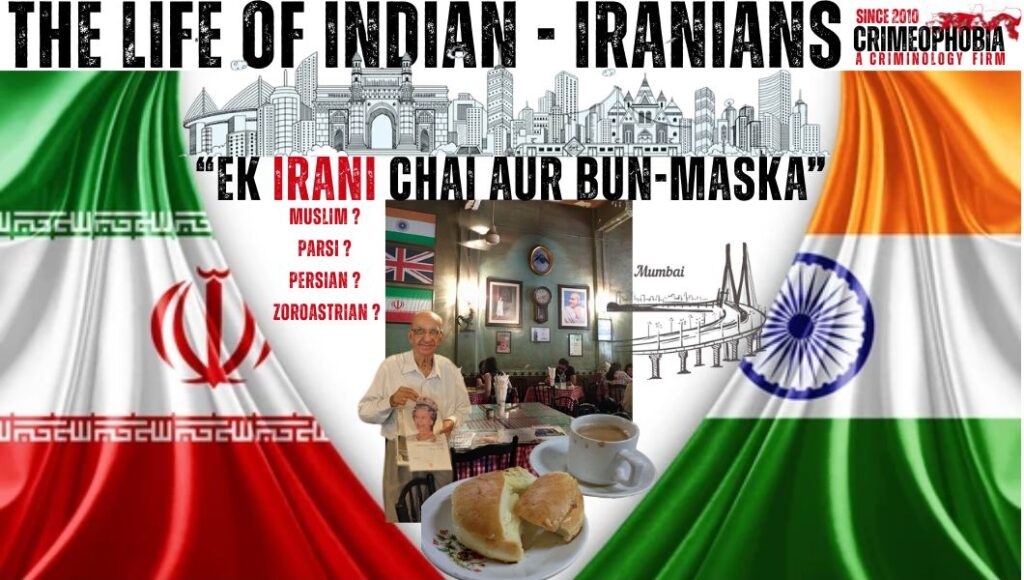
Mumbai’s cosmopolitan character allowed Irani, Persian, and Parsi communities to flourish socially and economically. One of the most symbolic establishments representing this cultural fusion is Britannia & Co., one of Mumbai’s most historic Iranian cafés. Inside the café, visitors often notice an unusual yet powerful display: the flags of India, Britain, and Iran placed together alongside photographs of Mahatma Gandhi and Queen Elizabeth II. Above them appears the image of Zarathushtra Spitama, symbolizing the spiritual roots of Zoroastrianism and the Persian heritage from which many migrants originated. Over the years, Britannia Café has attracted attention far beyond Mumbai. The owner of the iconic Britannia & Co. restaurant in Mumbai who wrote letters to Queen Elizabeth II was Boman Kohinoor (Boman Rashid Kohinoor). Members of the British Royal Family—including the Late Queen Elizabeth II, the current King Charles III, and other members of the royal household—have maintained cordial communication with the Late Boman Kohinoor through letters and goodwill messages which has Boman used to show it to every customer while taking orders under he died at the age of 97 in 2019 while the Queen died in 2022 at age 96. During visits to India, the British royal family has also shown interest in Mumbai’s historic Iranian café culture, particularly Britannia Café, which was founded during the British era. Such gestures reflect how this humble restaurant has become an unexpected cultural bridge connecting British colonial history, Iranian migration, and Mumbai’s cosmopolitan identity.
The Golden Era of Irani Cafés
Several decades before international coffee chains entered India, Irani cafés had already become the cultural heartbeat of Mumbai. These cafés served simple yet legendary dishes such as Irani chai, bun maska, kheema pav, and caramel custard. Their marble tables, bentwood chairs, vintage clocks, and glass jars filled with biscuits created a nostalgic atmosphere that continues to attract loyal patrons. In the everyday language of Mumbai’s streets, the classic order “Ek Irani chai aur bun-maska” became symbolic of the city’s café culture—an expression still heard across many of the old establishments today. Iconic cafés that helped shape this tradition include Britannia & Co., Kyani & Co., Café Military, and Jimmy Boy. Restaurants like Persian Darbar continue to reflect the enduring influence of Persian and Iranian culinary traditions in Mumbai’s dining landscape. Among the most celebrated dishes associated with Parsi and Irani cuisine is Berry Pulao, famously served at Britannia Café—a dish that combines fragrant rice with Iranian berries, reflecting a beautiful fusion of Persian ingredients and Indian culinary traditions. Classic beverages from Parsi cafés also include Pallonji’s Soda, a traditional soda brand long associated with Mumbai’s historic cafés and eateries.
Parsis: Builders of Modern India
Beyond cafés and cuisine, the Parsi community played a remarkable role in shaping modern India. Industrial pioneers such as Jamsetji Tata, founder of the Tata Group, laid the foundations of India’s modern industrial economy. Other influential industrial families include the Godrej Group, founded by Ardeshir Godrej, and the historic Wadia Group, founded by Lovji Nusserwanjee Wadia. In arts and culture, the community has also left a global imprint. Actor Boman Irani and legendary rock musician Freddie Mercury—born Farrokh Bulsara to a Parsi family—reflect the extraordinary cultural reach of the community.
Ancient Reformers and Modern Iran
The spiritual reformer Zarathushtra Spitama lived thousands of years ago and introduced a philosophy centered on ethical responsibility and moral choice. Modern Iran, however, operates under a very different political structure. Following the Iranian Revolution of 1979, the monarchy of Mohammad Reza Pahlavi was replaced by the Islamic Republic led by Ruhollah Khomeini. This revolution fundamentally reshaped Iran’s governance, transforming it into a theocratic republic guided by Islamic leadership rather than the ancient Persian religious traditions. In recent years, internal protests and geopolitical tensions have prompted some analysts to speculate about the possibility of another major political transformation in Iran. Some commentators refer to these developments as ideological struggles within the Islamic world involving regional rivalries and political divisions. However, dramatic phrases such as a “First Islamic World War” remain speculative commentary rather than formal geopolitical classifications.
Identity and Global Awareness
A fascinating sociocultural dimension that often creates confusion internationally is that Iranians, Persians, and Parsis may share historical roots and similar national symbolism—including the Iranian flag—yet their religious beliefs and historical narratives can differ significantly.
For instance:
• Many modern Iranians follow Islamic leadership established after the Iranian Revolution.
• Persian cultural nationalists emphasize Iran’s ancient pre-Islamic civilizational heritage.
• Parsis in India continue to practice Zoroastrianism and follow the teachings of Zarathushtra.
Because of these differences, observers are often advised to understand the background and identity of the Iranian individual or community they are interacting with—whether they identify primarily as Muslim Iranians, Persian cultural descendants, or Parsi followers of Zoroastrianism.
A Tradition of Indian Hospitality
For centuries, India provided refuge where Zoroastrians and later Iranian migrants could live peacefully and prosper. Regions like Gujarat and cities like Mumbai welcomed them without hostility, allowing their religion, traditions, cuisine, and businesses to flourish. Many historians and cultural observers believe that part of this acceptance may also have come from a deeper civilizational understanding. Hindu communities historically understood the hardships faced by Zoroastrians after the Muslim conquest of Persia and therefore extended refuge and protection. The cultural memory of religious displacement and civilizational upheaval may have played a role in why Zoroastrians were welcomed with empathy rather than suspicion. Over time, India’s diverse society—including Hindus, Muslims, Christians, and others—has collectively upheld the rights and dignity of Irani, Persian, and Parsi communities.
A Continuing Geopolitical Question
Even today, the transformation of Iran after the 1979 revolution raises complex geopolitical questions. Some analysts quietly debate whether the historical rupture between Iran’s ancient Zoroastrian-Persian civilization and its modern Islamic political structure influences how other Islamic nations interact with Iran. Another discussion often raised in geopolitical circles concerns the strategic presence of American military bases across parts of the Middle East. Critics and analysts question whether these arrangements are purely strategic alliances or whether deeper sectarian and regional rivalries—such as Sunni-Shia tensions—also influence these decisions. These remain subjects of ongoing debate among historians and international relations scholars.
A Living Cultural Bridge
Today, the legacy of Irani, Persian, and Parsi communities survives not only in temples and community institutions but also in cafés, restaurants, industries, and philanthropic organizations that helped shape modern India. From the aroma of Irani chai in century-old cafés to the industrial empires built by visionary Parsis, their story reflects migration, resilience, and coexistence. And nowhere is that story more alive than in Mumbai—where Iranian café culture, Persian heritage, and Parsi entrepreneurship continue to enrich the city’s social fabric.
Disclaimer
This article has been prepared based on a combination of offline research, publicly available historical references, and online informational sources. While efforts have been made to ensure accuracy, the author and publisher do not claim absolute completeness or precision of all historical, cultural, or geopolitical details presented herein. Readers are advised to independently verify the information, references, and interpretations mentioned in this article before relying on them for academic, journalistic, legal, or professional purposes. In case of any discrepancies, factual errors, or additional historical insights, readers are encouraged to inform or update the publisher so that necessary corrections or clarifications may be incorporated in future versions.